Who We Are
Justice for My Sister is a nonprofit arts organization working at the intersection of storytelling, healing, and systems change. We train BIPOC women, nonbinary youth, foster youth, and survivors of gender-based violence to create films that heal, inspire, and challenge the dominant narratives in media.
Our Mission & Vision

Justice for My Sister (JFMS) trains women of color, nonbinary youth, foster youth, and survivors of gender-based violence to make films with a gender equity and racial justice lens, as a means to heal from trauma and overcome financial barriers to entering the TV and film industry.
our vision is simple:
We envision a film and TV industry populated by advocates of gender equality and racial justice, to champion a transformation of the industry based on anti-violence practices.
Our History and impact

Justice for My Sister was founded in 2011 by filmmaker and activist Kimberly Bautista, following the release of her award-winning documentary Justice for My Sister, which addressed the crisis of femicide in Guatemala. Rather than ending with the film, Kimberly partnered with survivors, organizers, and artists to host community screenings, self-defense trainings, and resource-sharing events. These efforts turned storytelling into a space for connection, healing, and action.

The movement soon extended into Los Angeles, where our team built partnerships with local organizations, schools, and cultural centers. Together, we created accessible programming that blended trauma-informed filmmaking, after-school mentorship, and violence prevention education. From community parks to classrooms, we held space for BIPOC women, nonbinary youth, foster youth, and survivors to reclaim their narratives and build supportive, creative communities.
In 2015, Justice for My Sister formalized its operations as a fiscally sponsored project of Community Partners in Los Angeles, expanding our reach with film production labs, job training, and trauma-informed workshops. Over the last decade, we’ve served thousands of BIPOC women, nonbinary youth, foster youth, and survivors, preparing them to lead both behind the camera and within their communities.
Over the past ten years, Justice for My Sister has served more than 12,000 youth and adults, produced over 75 original short films, and facilitated more than 1,800 hours of workforce training. Our programs have supported hundreds of participants in developing film and media skills, securing paid creative opportunities, and becoming changemakers in their communities and industries.
Every program reflects our belief that stories have the power to heal, inspire, and disrupt. Our work continues to grow alongside our community, and we remain committed to building a more inclusive, joyful, and equitable media future. Want to explore more of our work?
Our VAlues
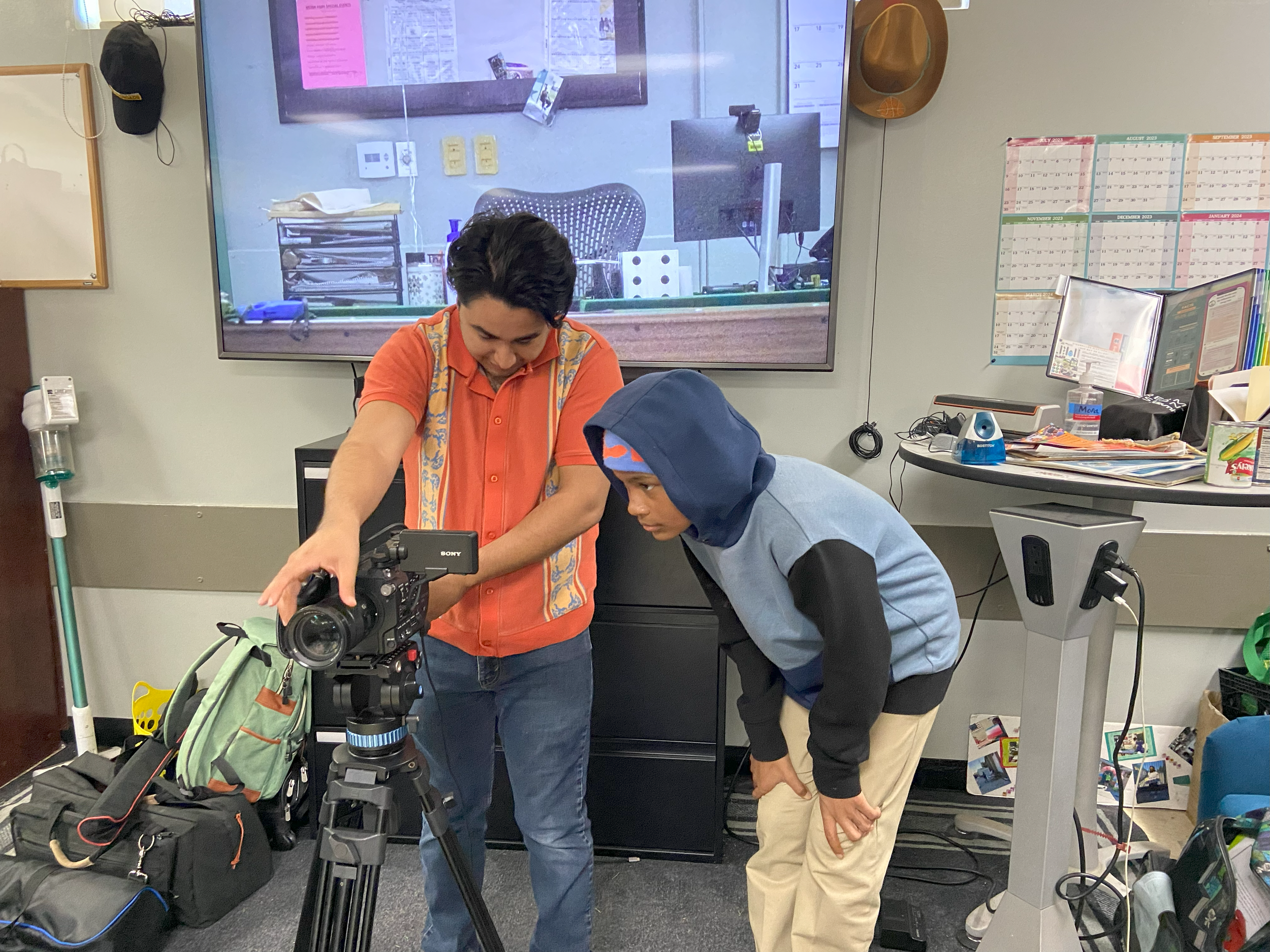
The company values are held by Justice for My Sister, and inform our decision-making process at every level:
Integrity
We will make decisions with the benefit of the whole in mind, conduct ourselves with truthfulness and care, and be direct about our expectations, needs and observations.
Excellence
We pour into our participants and community from a full cup, delivering consistently high-quality services rooted in care, clarity, and follow-through. Excellence means honoring our relationships, internally and externally, by showing up with preparation, purpose, curiosity, and respect. We build trust through integrity, sustained effort, and a commitment to the personal and professional growth of our community
Trust
Understanding that trust is foundational to collaboration and team-building, we build it by being transparent about our decision-making, following through on commitments, holding respectful boundaries, and intentionally listening to understand.
Honoring Lineage
We are privileged to do this work because of elders, ancestors, teachers, friends and others who have paved the way and we intend to name our artist, political, spiritual and ancestral lineages so as to acknowledge the labor that we are building upon. This practice has been modeled and named by Thich Nhat Hanh, adrienne maree brown, Adelina Anthony, and many others.
Respect and Learning from Mistakes
We operate from a place of care and consistency, recognizing that mistakes are part of growth. We learn from missteps, take responsibility, and use those experiences to strengthen our systems, practices, and team culture. Respect means giving one another the dignity of clear feedback, second chances, and the opportunity to improve.
Accountability
We uphold a culture of clear communication, follow-through, repair, and mutual responsibility. We hold ourselves and each other accountable to our roles, goals, and the shared values. Accountability is how we honor one another’s time, energy, and contributions, and how we build trust.

"Justice for My Sister is such a special place. Every program is grounded in a trauma-informed and restorative framework. My colleagues are incredible artists who excel in a variety of crafts, bringing brilliance and intentionality to our curriculum. Having worked across so many programs, I’ve seen firsthand how invaluable JFMS is for the communities we serve.” - Jahmil Eady - Jfms Mentor and Teaching Artist.
